Tree Health Assessment in Fargo, ND
Not sure if a tree is dying or dangerous? A Fargo tree health assessment checks structure, decay, and risk so you can decide between care and removal.
Why an assessment comes first
A tree health assessment answers the question most Fargo homeowners actually have: is this tree a problem, and if so, how big a problem? Mature trees are worth real money in shade, shelter, and curb appeal, so cutting one down should be a decision, not a guess. An assessment looks at structure, signs of decay, and the load the tree is likely to see from Red River Valley wind and ice before anything is scheduled.
There's usually a reason you're wondering. Common triggers are a canopy that leafed out thin or late, dead branches in the upper crown, mushrooms or soft spongy wood at the base, cracks or cavities in the trunk, a lean that seems new, or bark that's falling away in sheets. In our clay soils, a tree can also go into slow decline simply because its roots sit in water through a wet spring and then bake in a dry summer, and that stress shows up in the crown before the tree ever leans.
The outcome points one of a few ways. A sound tree with a fixable issue may only need tree trimming to remove deadwood and lighten a heavy limb. A tree that has failed structurally usually moves toward tree removal before it fails on its own schedule instead of yours.
What the assessment looks at
The check moves from the roots up, because that's the order most trees fail in.
-
Root plate and base
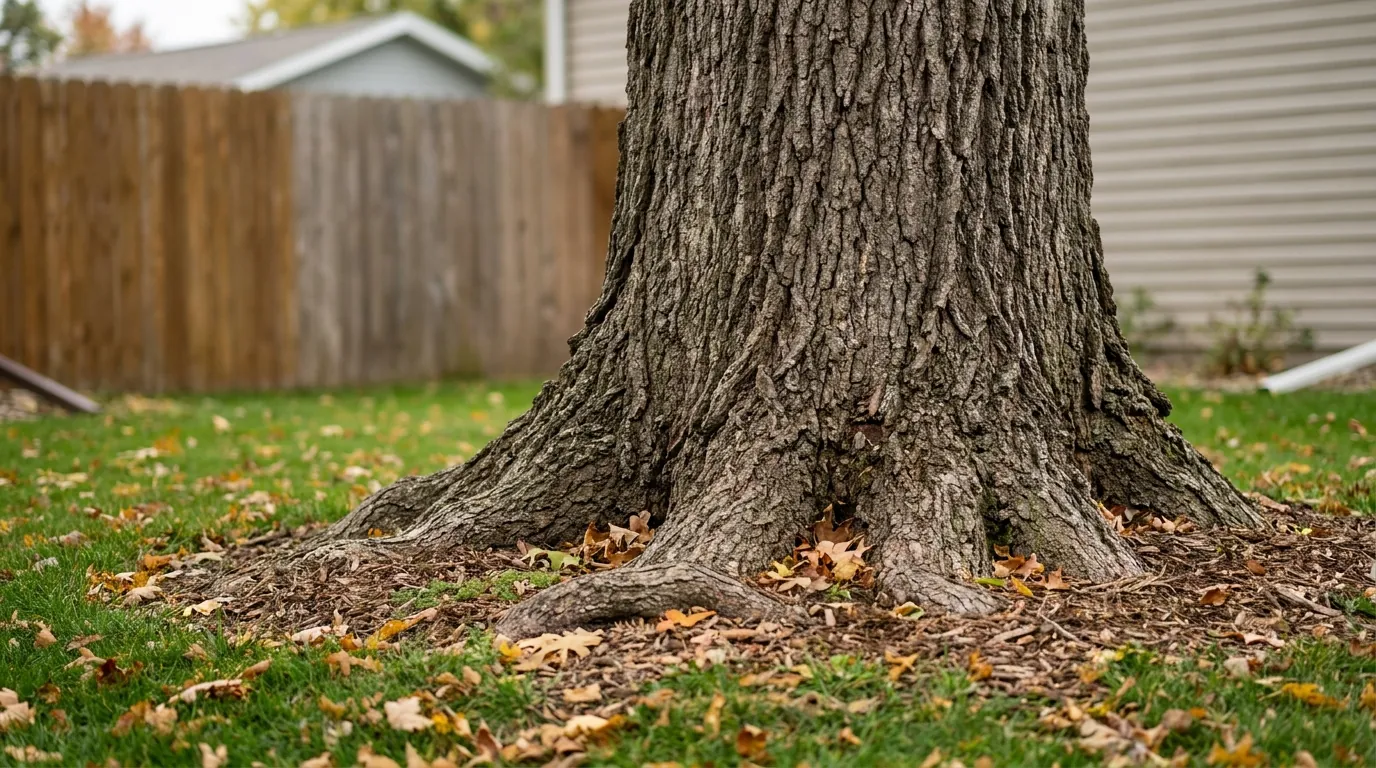
We look for heaving soil, lifted roots, fungal growth, and soft or hollow wood at the collar. In heavy clay that holds water, root problems are a leading cause of whole-tree failure.
-
Trunk and main stem
Cracks, cavities, included bark in a main fork, and old wounds all affect how much load the trunk can carry. A big crack in a main stem changes the whole picture.
-
Canopy and limbs
Deadwood, thinning, dieback at the branch tips, and hanging or cracked limbs tell us how the tree is doing and what might come down first in a storm.
-
Setting and target
What's under the tree matters. A declining tree over open lawn is a different decision than the same tree over a roof, a play set, or the neighbor's driveway.
-
A clear recommendation
You get a plain reading of the tree's condition and the realistic options — monitor, trim, or remove — with the reasoning behind each so you can choose.
Worried about a tree in your yard?
If a tree in Fargo or a nearby town looks sick, leans, or just doesn't feel right, an assessment gives you a straight answer before you commit to anything.
An assessment is useful even when the answer is good news — knowing a tree is sound is worth it too.
Frequently asked questions
How do I know if my tree is dying or just stressed?
Stress and decline can look similar from the ground — thin leaves, some deadwood, slow growth. The difference is usually in the roots and trunk, which is why an on-site look matters: a stressed but sound tree often recovers with care, while structural decay rarely reverses.
Can a leaning tree be saved?
It depends on why it leans. A tree that has always grown at an angle with a firm root plate may be perfectly stable, while a tree that started leaning after a storm, with soil lifting on one side, has usually begun to fail and leans toward removal in our assessment.
What does our clay soil do to tree health here?
Red River Valley clay holds water, so roots can sit saturated through a wet spring and then dry hard in summer. That cycle stresses roots, encourages rot at the base, and is a common hidden reason a tree declines even when the crown looked fine the year before.
If the tree is healthy, do I still need to do anything?
Often just light maintenance. A sound tree may only need deadwood removed or a heavy limb lightened through trimming, which both reduces storm risk and keeps the tree in good shape for years.