Lot and Brush Clearing in Fargo, ND
Clearing overgrown lots, fence lines, and brush around Fargo. What the work involves, how clay soil and the short thaw window affect it, and how to plan it.
When a lot needs clearing
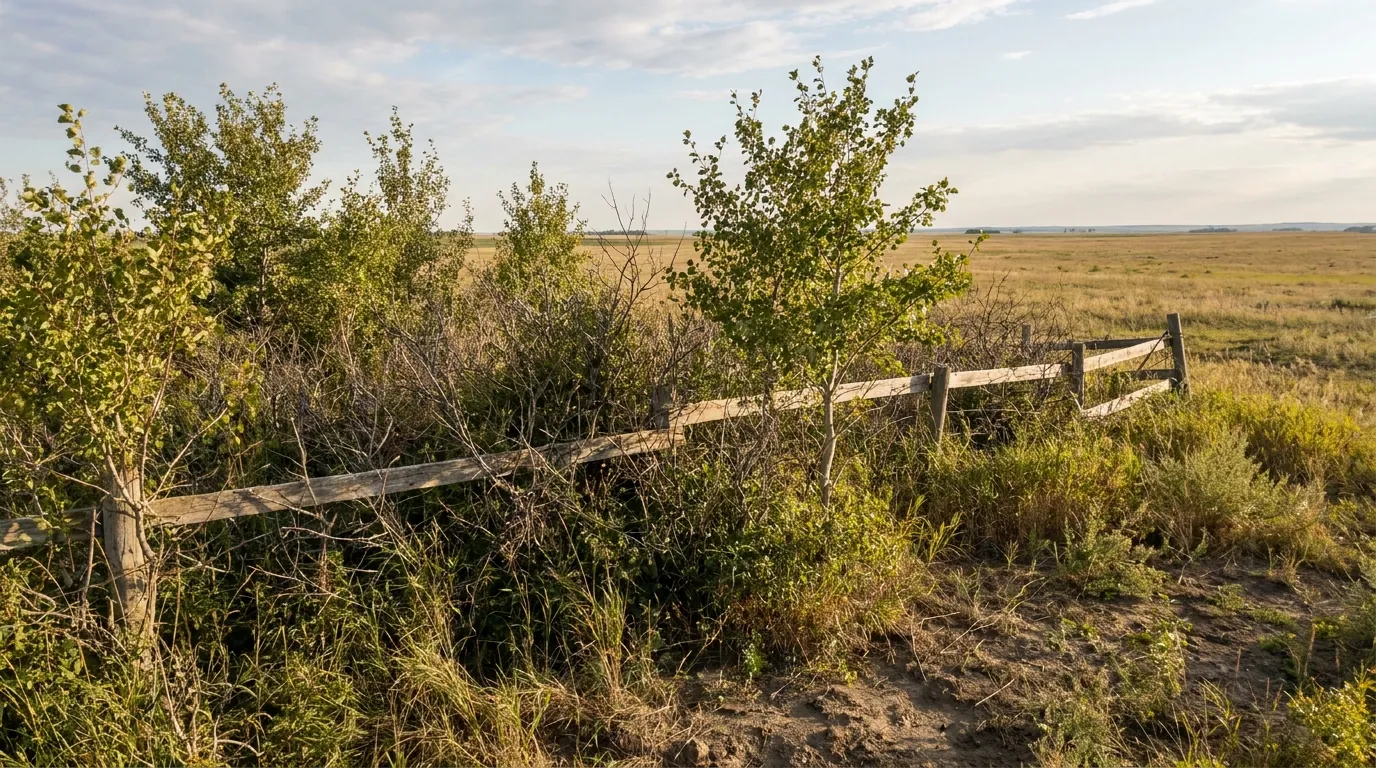
Around Fargo, land fills in quickly where it isn't maintained. Volunteer boxelder, green ash, and buckthorn colonize fence lines, ditch banks, and the edges of old shelterbelts, and within a few seasons a clear corner becomes a thicket. Whether you're prepping a building lot, reclaiming a back acre, or cleaning up a windbreak that has gone ragged, lot and brush clearing is about deciding what stays, what goes, and how to get it out without tearing up the ground.
The signs that it's time are practical ones: you can't walk or mow where you used to, small trees are crowding a fence or outbuilding, dead and leaning stems are collecting in the understory, or an old shelterbelt has thinned on one side and filled with brush on the other. Overgrown ground also holds moisture and shelters pests, and in the Red River Valley's heavy clay that trapped water keeps the soil soft and rutted far longer than you'd expect.
Clearing often pairs with other work. A lot with a few worth-keeping mature trees benefits from a tree health assessment before the saws come out, and anything removed at ground level leaves stumps that can be finished with stump grinding.
How clearing work is done
Good clearing is selective and planned around the soil, not just a push-everything-down pass.
-
Walk and mark
We walk the lot with you to mark keepers, hazards, and property lines, and to spot anything — utility pedestals, drain tile, a septic field — that the work has to avoid.
-
Drop and process the growth
Brush and small trees are cut, larger trees are felled or taken down in sections where they're close to structures, and material is chipped or stacked by what you want done with it.
-
Deal with stumps
Depending on your plans for the ground, stumps are cut flush, ground out, or left for a future pass. Grinding matters if you intend to mow, build, or replant.
-
Grade the debris and clean up
Chips and slash are hauled, piled, or spread as agreed, and the surface is left as even as the clay and moisture allow for the season.
Have a lot or fence line to open up?
Tell us what the ground is doing now and what you want it to become — pasture, building site, clean fence line — and we'll walk it with you to scope the clearing.
Timing often depends on how dry the ground is; we'll talk through the best window.
Frequently asked questions
When is the best time of year to clear a lot in the Fargo area?
Frozen or firmly dry ground is ideal because equipment stays on top of the heavy clay instead of rutting it. Late winter on solid frost and mid-to-late summer dry spells are usually the cleanest windows; the short thaw in spring tends to leave the soil soft and easily torn up.
Can you clear brush but keep the good trees?
Yes, and that's the usual goal. We mark mature or worth-keeping trees before anything is cut, and we can combine clearing with a health assessment so the trees you keep are actually sound rather than just large.
What happens to all the brush and wood?
Material is handled the way you prefer within reason — chipped and spread, chipped and hauled, piled for firewood, or stacked for burning where that's allowed. We settle this before work starts so there are no surprises at cleanup.
Do you handle shelterbelt and windbreak cleanup?
Yes. Older shelterbelts around Fargo and towns like Mapleton and Casselton often need dead stems removed and brush opened up so the remaining trees stay healthy and the row keeps doing its job.