Stump Grinding in Fargo, ND
Stump grinding in Fargo and nearby towns. How grinding works, why clay soil and roots matter, and how to decide depth and cleanup.
Why that stump is worth dealing with
A stump left after a removal is more than an eyesore. It is a trip hazard, a mower-blade killer, and in Fargo's wet clay it holds moisture and feeds fungus and insects that can spread to nearby trees. Many stumps also throw up suckers — boxelder and cottonwood are notorious for it — so the tree keeps trying to come back long after the trunk is gone.
Grinding is the practical way to be done with it. Rather than digging out the whole root ball, which tears up a yard, a grinder chews the stump and major surface roots down below grade so you can backfill and plant grass over it. If you have just had a tree taken out, grinding is the natural companion to tree removal and can usually be done the same visit.
How stump grinding works
The process is quick once we are set up, but a few steps make the difference between a clean result and a mess.
-
Locating what is underground
Before any grinding, we check for irrigation lines, buried utilities, and rock near the stump. Fargo yards often hide sprinkler lines just under the clay, and the grinder does not care what it hits.
-
Grinding the stump
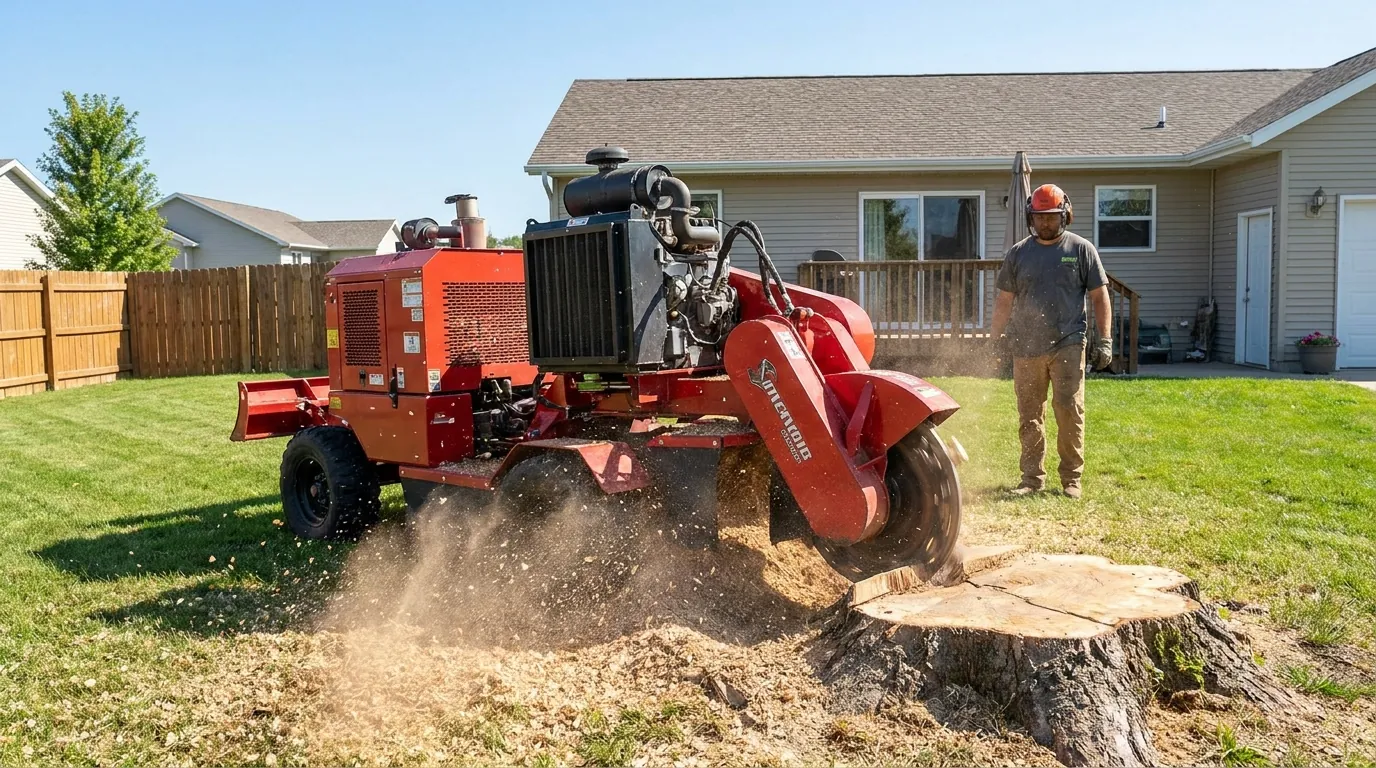
A rotating cutting wheel reduces the stump to chips, working down past grade and out across the major surface roots that cause heaving and suckering.
-
Setting the depth
We grind deeper if you plan to replant a tree or lay sod, shallower if you just want the trip hazard gone. Deeper work means more material to backfill.
-
Cleanup and backfill
The grindings make good fill for the hole, or we can haul the excess. The spot is raked level so it is ready for topsoil and seed.
What Fargo ground means for grinding
Heavy clay changes the job in two ways. First, it packs tight around roots, so the grinder works harder and the surface roots run wide and shallow — which is exactly why so many Fargo stumps sucker and heave sidewalks. Grinding those lateral roots, not just the center stump, is what actually stops the regrowth.
Second, clay drains slowly. A ground-out hole left open can hold water and stay soggy, so backfilling and compacting the grindings matters more here than on sandy ground. In spring, when the valley's soil is saturated, we sometimes wait for it to firm up before bringing a grinder across a lawn, the same access concern that affects a full removal.
If the stump is left from a tree that failed and you are wondering whether others on your property are at risk, a tree health assessment can flag the next problem before it becomes another stump.
Ready to reclaim that spot in the yard?
Send us the size and location of the stump and whether you plan to replant or seed over it, and we will tell you what depth and cleanup the job calls for.
Serving Fargo, West Fargo, Horace, Mapleton, Oxbow, Argusville, and Casselton.
Frequently asked questions
How deep do you grind a stump?
It depends on your plans. For simply removing a trip hazard, a few inches below grade is enough. If you intend to plant a new tree or lay sod, we grind deeper and chase the major surface roots so the ground sits level and does not sprout suckers.
Can you grind the stump the same day you remove the tree?
Usually, yes. When we handle the removal we can bring the grinder in once the trunk is down. Combining the visits saves a second mobilization and leaves you with a finished, level spot in one go.
What happens to all the wood chips?
Grinding produces a pile of mixed wood and soil. The grindings make excellent backfill for the hole, and most people reuse them that way. If there is excess or you want clean topsoil instead, we can haul the extra off.
Will grinding stop the roots from sprouting again?
Grinding the stump plus the major surface roots greatly reduces suckering, which matters with boxelder and cottonwood in our clay soils. Occasional stray sprouts can still appear from deeper roots and are easy to knock back once the main mass is gone.