Stump Grinding & Post-Removal Repair in Fargo
Stump grinding and site repair after tree removal in Fargo. Closing out the stump, cleaning up roots, and getting the ground ready to reuse on clay soil.
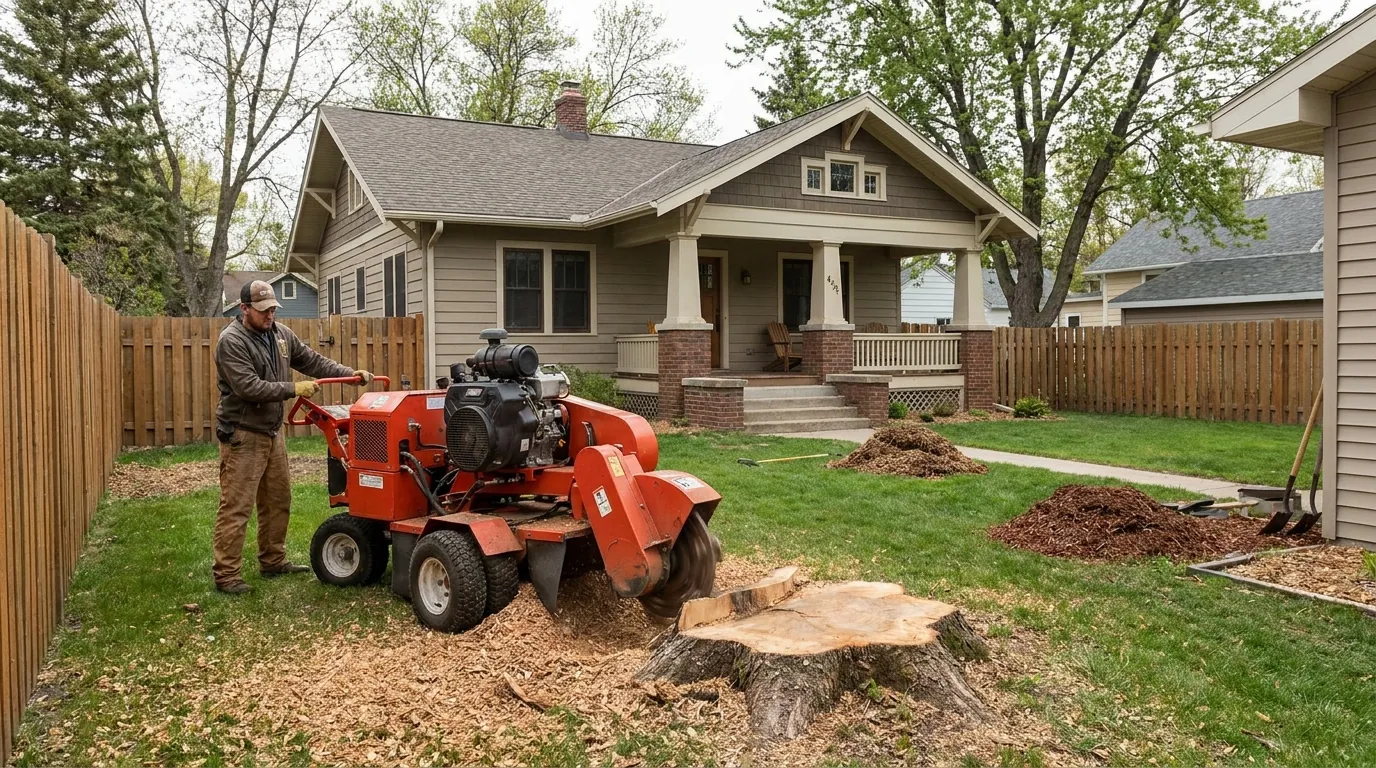
What happens after the tree comes down
Taking a tree down is only part of the job. What is left behind — a stump, a ring of surface roots, a rutted patch of lawn, or a scarred boulevard strip — is what most homeowners actually live with day to day. Post-removal repair is the work of turning that leftover into a spot you can mow over, plant in, or simply forget about. If you have already had a tree removed and are staring at a stump that trips the mower and sprouts suckers every spring, this is the service that closes it out.
The most common warning signs that a stump needs attention are new shoots growing from the base, soft rotting wood that attracts insects, and roots that lift walkways or catch equipment. On the heavy clay common around Fargo, a rotting stump can also hold water and create a persistent wet, mushy patch in the lawn. Left alone, some stumps sit for years; others become a nuisance quickly, especially fast-sprouting species like cottonwood and boxelder.
The repair process
Site repair follows removal in a straightforward sequence.
-
Stump grinding
A grinder reduces the stump and major surface roots below grade — typically several inches down so the area can be covered with soil and seeded. Depth depends on what you plan to do with the spot.
-
Root and debris cleanup
Grindings are a mix of wood chips and soil. They can be raked out and hauled or, in many cases, used to backfill the hole as they settle. Larger surface roots that run away from the stump are addressed where they cause problems.
-
Grading and soil fill
The hollow left by grinding is filled and graded so it does not become a low spot that collects water — an important step on clay that already drains slowly.
-
Seeding or replanting prep
The spot is prepared for grass seed or, if you want a new tree, cleared enough to plant. Fresh grindings are low in nutrients, so good topsoil matters if you plan to grow anything there soon.
Why Fargo soil matters here
Heavy clay changes how a repaired site behaves. Because clay drains slowly, any depression left by a poorly filled stump hole tends to hold snowmelt and rain, and that standing water can kill new grass and rot a fresh planting. Proper grading and adequate topsoil are what keep the spot from becoming a soggy low patch. During the short thaw window, grindings and fill settle unevenly on saturated ground, so a spot sometimes needs a second top-off after the soil firms up.
Repair is a natural next step after a tree removal, and it also sets the stage if you plan a new planting in the same location. If you are deciding between grinding a stump and simply living with it, the questions are how the stump affects mowing, drainage, and your plans for that part of the yard. You can read more about the whole process on our home page.
Close out that stump
Tell us what you are dealing with — a single stump, a rutted yard, or a patch you want to replant — and we can talk through what it takes to make the site usable again.
Grinding depth and cleanup are scoped to what you plan to do with the space.
Frequently asked questions
How deep does stump grinding go?
For a spot you plan to seed over, grinding several inches below grade is usually enough to cover with soil. If you want to plant a new tree in the same place, deeper grinding and more root removal help so the new roots have room.
Can I plant grass or a new tree where the stump was?
Yes, but the leftover wood grindings are low in nutrients, so adding topsoil makes a big difference. On clay, grading the spot so it does not sit low and hold water is just as important as the soil itself.
What causes a stump to keep sprouting?
Some species send up shoots from the roots and stump for a season or more after removal. Grinding the stump and cutting the surface roots reduces this, and persistent sprouts can be knocked back as they appear.
Do the grindings get hauled away?
That depends on your preference. Grindings can be used to backfill the hole as they settle, or raked out and removed if you want clean soil for planting. Volume of material and hauling are common cost drivers.