Tree Planting & Replacement in Fargo, ND
Tree planting and replacement in Fargo after removal. Choosing the right species for clay soil and cold winters, and getting a new tree started right.
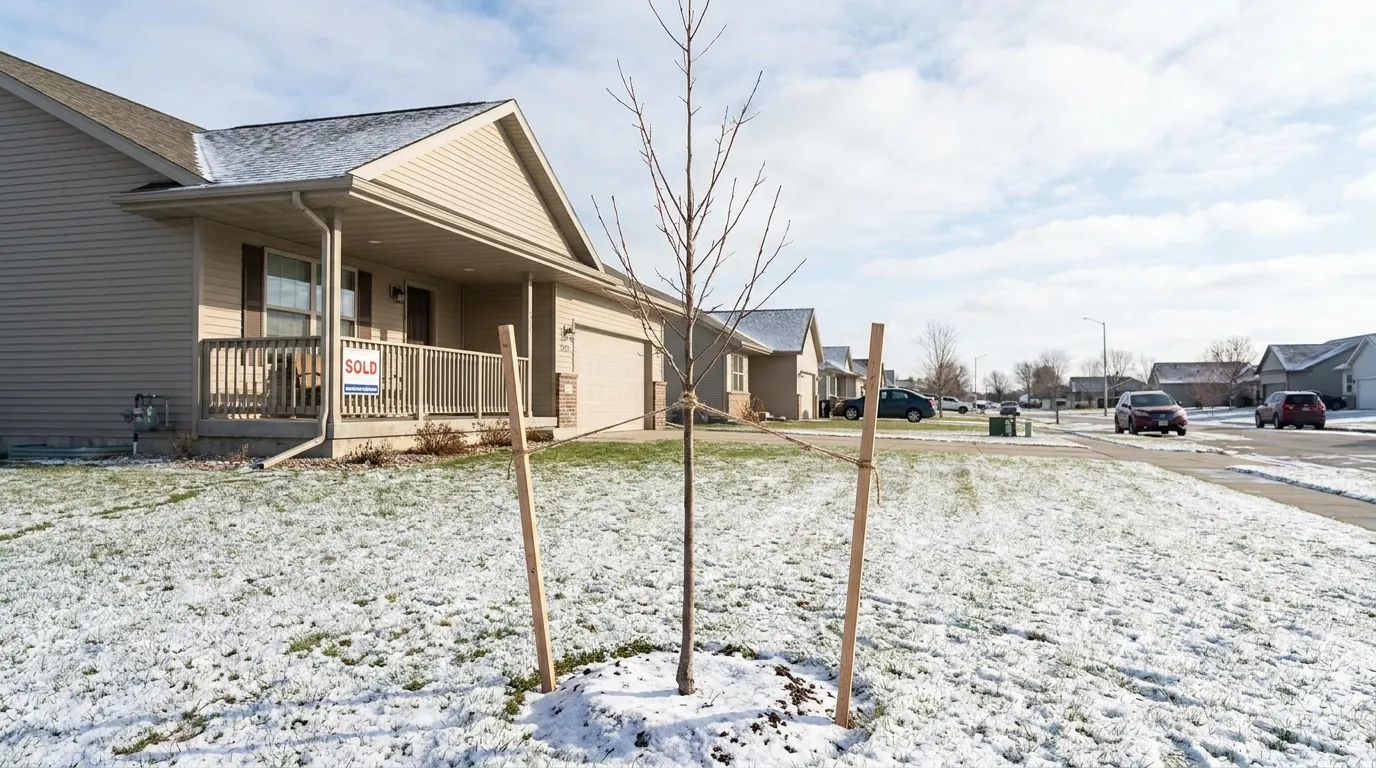
Putting a tree back after a removal
When a mature tree comes out, the yard changes. A spot that was shaded is suddenly bright, a windbreak has a gap, or a boulevard has lost the tree that framed the street. Replanting — installing a new tree in place of the one removed — is how you rebuild that over time. The key is not simply dropping a nursery tree in the old hole, but choosing the right species for the site and giving it a real chance to establish in Fargo's demanding conditions.
Homeowners usually replant for one of a few reasons: to restore shade, to replace an ash lost to borer with something less vulnerable, to fill a windbreak, or to meet a boulevard planting expectation. The mistake to avoid is replanting the same short-lived, brittle species that caused the problem in the first place. This is the point in the process where a little planning pays off for decades.
How a planting is done
Getting a new tree established is mostly about the site and the first season.
-
Site and species selection
The spot is evaluated for sun, space, overhead lines, and how wet it stays. Species are chosen to match — cold-hardy, tolerant of heavy soil, and sized so they will not outgrow the location or the wires above it.
-
Preparing the hole
In clay, the planting hole is dug wide rather than deep, with the root flare kept at or slightly above grade so the tree does not sit in a bowl of water. Glazed clay sidewalls are loosened so roots can move outward.
-
Planting and backfill
The tree is set plumb, backfilled with native soil, and watered in to settle air pockets. Mulch is spread in a ring — not piled against the trunk — to hold moisture and moderate soil temperature.
-
Staking and first-season care
Young trees may be staked loosely if wind is a concern, then followed with steady watering through the first summer and protection heading into a hard Fargo winter.
Fargo conditions and what survives here
Two local realities drive species choice: cold and clay. Winters here are long and severe, so trees must be fully hardy for the region, and the deep frost line stresses roots that were not planted with room to establish. Heavy clay holds water and drains slowly, which drowns species that need well-drained ground and rewards those that tolerate wet, dense soil. Because clay is slow to warm and slow to drain, planting timing matters — the short thaw window and the fall are generally kinder than the heat of midsummer.
Diversity is also worth thinking about. Neighborhoods that leaned heavily on ash learned the cost of a single-species canopy when borer arrived, so mixing in more resilient options protects the whole street over time. Replanting pairs naturally with the work that came before it: a tree removal opens the space, and site repair prepares the ground so a new tree is not planted into a compacted, poorly drained hole. For the bigger picture, see our home page.
Plan a replacement tree
If you have an open spot from a removal and want to replant, tell us about the location — sun, space, and how wet it stays — and we can talk through species that hold up in Fargo.
The best planting windows here are spring after thaw and fall before hard freeze.
Frequently asked questions
What trees do well in Fargo's clay soil?
Species chosen for cold hardiness and tolerance of heavy, wet ground tend to do best, while trees that demand well-drained soil struggle here. The right pick depends on the specific spot — how much sun it gets and how long it stays wet after rain.
When is the best time to plant a tree here?
Spring after the ground thaws and fall before a hard freeze are generally the kindest windows. Midsummer planting is harder on a young tree because heat and dense clay stress the roots before they establish.
Can I plant right where the old tree was?
Often yes, but the stump and major roots should be ground out and the hole filled with good soil first. Planting into leftover grindings or a compacted hole makes it harder for the new tree to root out.
How much water does a new tree need?
The first season is the critical one, and steady watering matters more than frequency — deep, regular soakings help roots move outward. On clay, avoid overwatering into a bowl that holds water, which can drown the roots.